News · via Latent.Space

Interesting links with a short summary. For long reads, see Articles.

Showing news from Latent.Space. Show all news

  1. · via Latent.Space

    Researchers using OpenAI’s GPT-5.6 Sol and other AI models disclosed two PHP-engine memory-corruption vulnerabilities, CVE-2026-109618 and CVE-2026-109619, that allow unauthenticated exploitation against major CMSs. The coordinated response across the PHP ecosystem shows AI can accelerate security audits, but developers should monitor patches and update their PHP installations promptly.
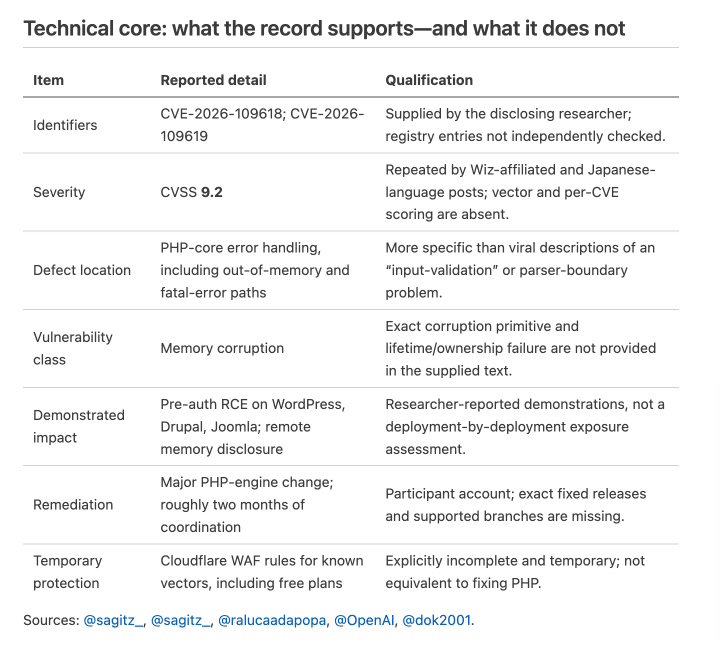
    PHP core memory-corruption bugs (PHP2Shell) disclosed via AI-assisted researchlatent.space ↗
  2. · via Latent.Space

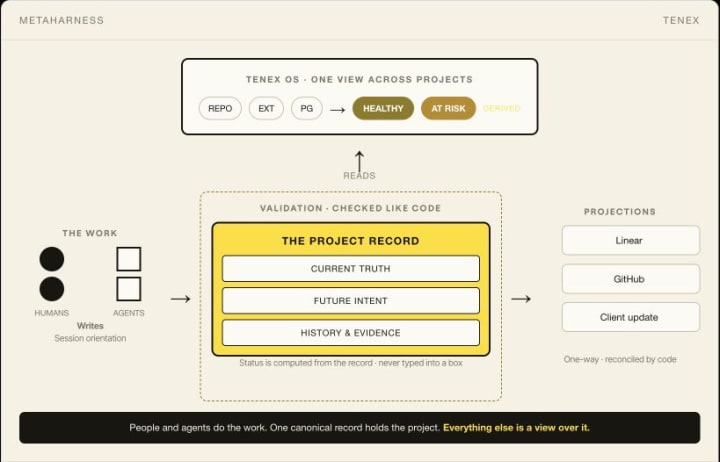
    Tenex pays AI engineers for delivered output rather than hours, aiming to align incentives as AI speeds up work. They keep story points for compensation but also consider non-ticket tasks like architecture design and customer context gathering. The model has scaled to a 75-person team serving Fortune 2000 and mid-market clients, highlighting how AI can reshape software development economics.

    Tenex experiments with output-based pay for AI-enhanced developmentlatent.space ↗
  3. · via Latent.Space

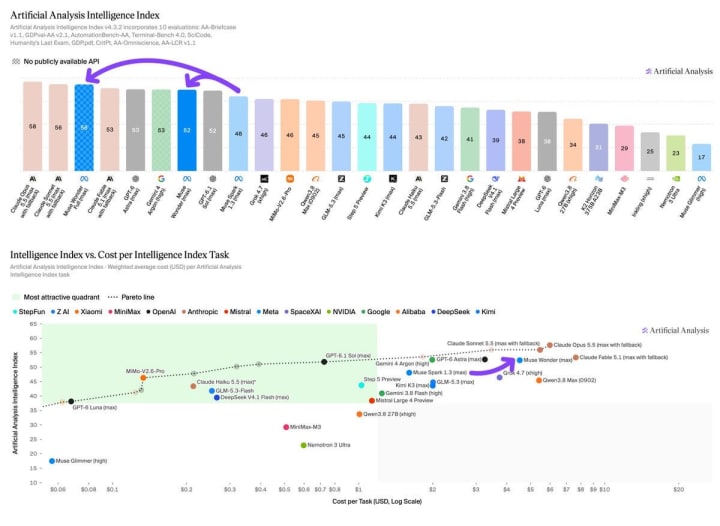
    Google released Gemini 4 Argon globally, targeting coding, knowledge work, enterprise workflows and cyber defense. Access is via the paid Gemini API, Gemini platform, Google AI Pro and Ultra in the Gemini app, and AI Mode in Search. Introductory API rates are $2/$10 per million input/output tokens, with a 95% discount on cached input, and rates are set to double after November 30.

    Google launches Gemini 4 Argon for coding and enterprise workflowslatent.space ↗
  4. · via Latent.Space

    Meta Superintelligence Labs released Muse Wonder and Muse Wonder Full, its second-generation model family positioned near the frontier after 14 months of development. The models are offered via the Meta Model API and Muse Code, with pricing of $4 per million input tokens and $20 per million output tokens, and a 1 M token context window. Developers can access Wonder now, while the full tier is limited to Muse Code subscribers.

    Meta launches Muse Wonder and Muse Wonder Full frontier modelslatent.space ↗
  5. · via Latent.Space

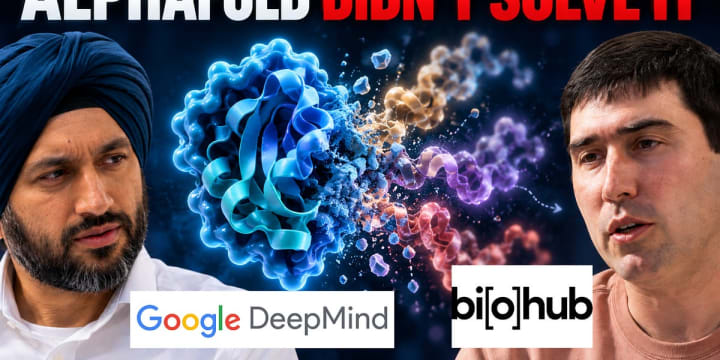
    Pushmeet Kohli and Sal Candido discuss why AlphaFold’s success doesn’t solve protein folding and why scaling compute and data alone won’t unlock biology. They argue that future AI models need better scaling laws and richer data to move beyond single-protein predictions. Developers interested in AI research may find the limits of current models and the push for new approaches relevant.

    Why AlphaFold Didn't Solve Protein Folding — Pushmeet Kohli, Google DeepMind & Sal Candido, Biohublatent.space ↗